Holistic Electric Machine Design: The Power of Simulation
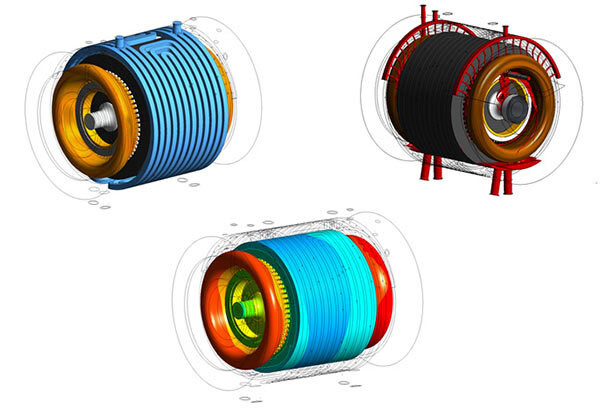

Electric machine design is a multifaceted process that involves considerations such as electromagnetic performance, thermal management, mechanical integrity, and ‘manufacturability’. Each of these aspects must be optimized to achieve the best overall design.
However, achieving this balance is not a straightforward task. Engineers often face challenges such as:
Given these challenges, relying solely on traditional design methods can result in suboptimal performance and prolonged development cycles. This is where simulation-driven design can make a transformative impact.
A holistic approach to electric machine design leverages simulation software to integrate electromagnetic, thermal, and mechanical analyses into a single workflow. This enables engineers to make data-driven design decisions early in the development process, reducing the reliance on costly and time-consuming physical testing.
Key benefits of a simulation-driven approach include:
Ansys provides a comprehensive simulation platform that facilitates a holistic approach to electric machine design. Two key tools in this suite, Motor-CAD and Maxwell, are instrumental in optimizing machine performance from concept to final production.
Motor-CAD is a specialized tool designed for rapid electric machine design and analysis. It allows engineers to evaluate key performance aspects such as electromagnetic characteristics, thermal behavior, and mechanical integrity within a single environment.
Motor-CAD’s fast computation times enable engineers to perform multiple iterations efficiently, ensuring an optimized machine design before proceeding to detailed analysis.
For more detailed electromagnetic simulations, Maxwell offers finite element analysis (FEA) capabilities that provide deep insights into machine performance. This tool is essential for optimizing core electromagnetic parameters such as:
By leveraging Maxwell, engineers can refine their designs with high accuracy, ensuring that the final product meets all performance and reliability requirements.
Integrating Motor-CAD and Maxwell into a cohesive design workflow enhances efficiency and decision-making. The typical workflow involves:
This streamlined process significantly reduces the time and cost required to develop high-performance electric machines.
The adoption of simulation-driven electric machine design is already transforming industries. For example:
By utilizing simulation tools, engineers can develop cutting-edge electric machines that push the boundaries of performance and reliability.
As electric machine applications continue to expand, the demand for more efficient, compact, and high-performance designs will only increase. Emerging trends such as AI-driven optimization, cloud-based simulation, and digital twins will further enhance the design process, enabling engineers to develop next-generation machines with unprecedented efficiency.
By embracing a holistic, simulation-driven approach, the industry can continue to innovate, reduce development cycles, and create electric machines that meet the evolving needs of modern technology.
Electric machine design is a complex, interdisciplinary field that demands a comprehensive approach to optimization. Traditional design methods, while effective in the past, struggle to keep pace with modern engineering challenges. By leveraging advanced simulation tools such as Motor-CAD and Maxwell, engineers can achieve higher performance, efficiency, and reliability while reducing development time and costs.
The future of electric machine design is undoubtedly simulation-driven. Those who adopt these technologies today will be at the forefront of innovation, shaping the next generation of high-performance electric machines across industries.