Simulation-Driven Additive Manufacturing: From Concept to Validated Design
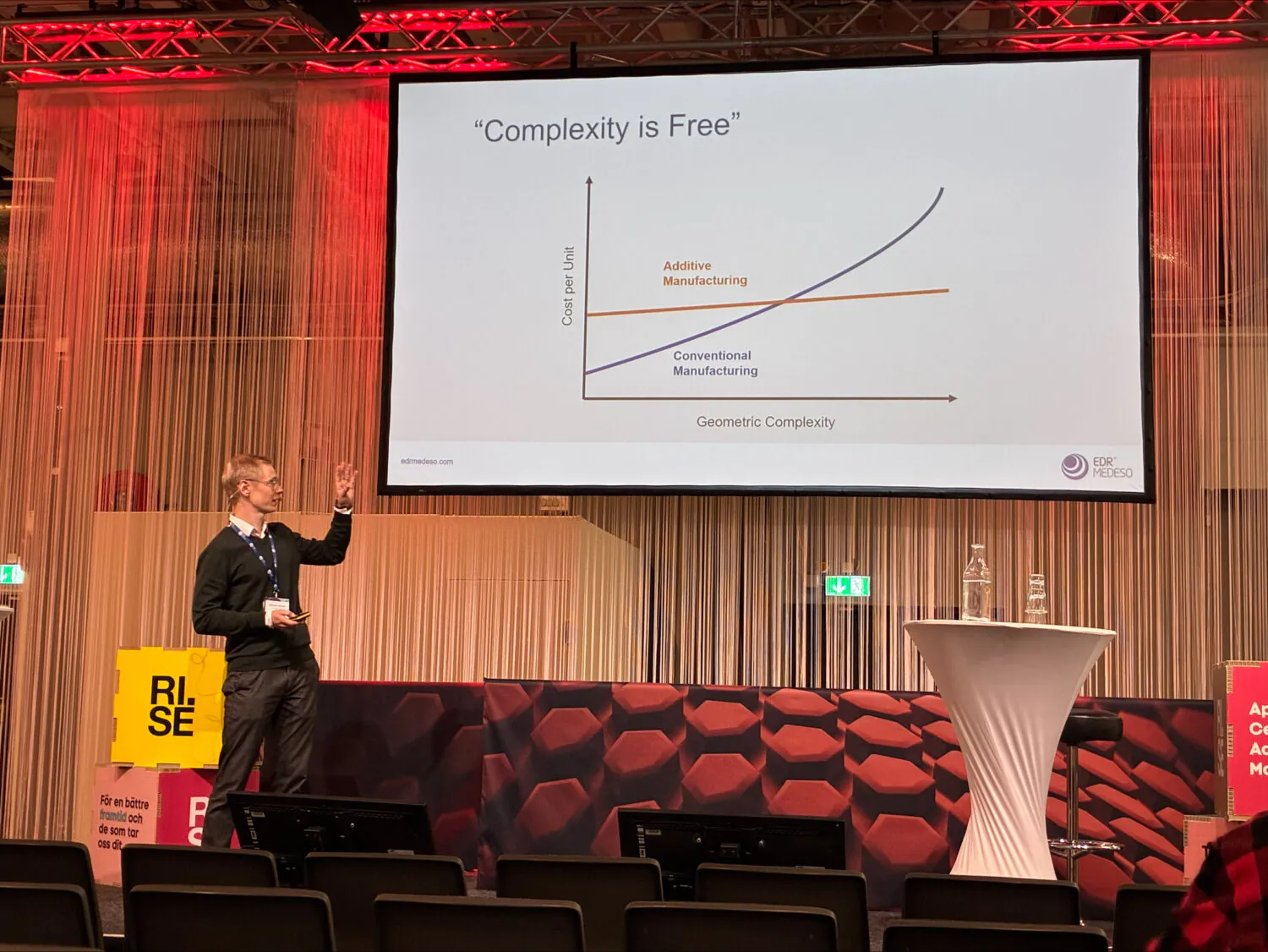

At Additive Intelligence 4.0 in Gothenburg, Sweden, Hampus Olsson from EDRMedeso presented how additive manufacturing simulation helps engineering teams manage this complexity and move toward reliable production. Using Ansys Additive Manufacturing, he demonstrated how design generation, performance validation, and manufacturing validation can be connected in a single, simulation‑driven workflow.
As additive manufacturing moves from prototyping to production, the importance of business case is growing. Advantages of additive manufacturing – such as increased design freedom – must be utilized to maximize product value. Meanwhile, the cost of getting things wrong increases: In metal additive manufacturing, issues such as distortion, residual stresses, and build failures often only become visible late in the process.
As Hampus described during the presentation in Gothenburg, increased design freedom does not automatically lead to better results. “This freedom of design can present the engineer with a bit of a conundrum,” he said, referring to the challenge of evaluating countless design parameters without simulation support.
Simulation addresses this challenge by helping engineers explore, evaluate, and down‑select designs early. By validating both product performance and manufacturability before printing begins, simulation reduces trial‑and‑error and increases confidence when moving toward production.
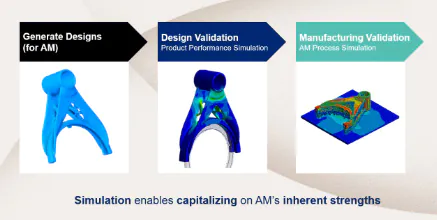
Describing the simulation‑driven workflow, Hampus explained: “We start by generating a number of different designs using an algorithm instead of doing it manually with CAD. The design performance – for example, structural dynamics or heat transfer – is then simulated, and an optimal design is chosen.
Lastly, manufacturability is assessed using additive process simulation, predicting common build defects such as distortion and overheating. Several design-and-test iterations can take place before hitting ‘print’, minimizing risk and enabling first-time-right production”.
Using simulation as part of the design workflow provides several clear advantages:
By combining generative design, performance simulation, and additive process simulation, the workflow presented by Hampus helps maximize the inherent strength of additive manufacturing.
Find out more about Additive Manufacturing Simulation Solutions
This article is based on Hampus Olsson’s presentation “Simulation Driven Additive Manufacturing: Overview & Results”, delivered at Additive Intelligence 4.0 in Gothenburg in March 2026. To see the full context, examples, and visuals discussed on stage, watch the complete presentation recording.