Agentic AI in Engineering

EDRMedeso frames agentic AI not as a standalone feature, but as a new operating model for engineering. Synopsys’ AgentEngineer technology applies AI agents and multi-agent systems to engineering workflows, with agents able to reason, plan, learn and execute tasks with increasing autonomy. The strategic emphasis is on workflow transformation, engineering productivity and better use of scarce expertise rather than on conversational AI alone.
The approach is organized around an L1 to L5 maturity framework, analogous to levels of vehicle automation. It begins with assistive automation and advances through collaborative, partially autonomous agents toward highly autonomous, self-directed systems. This gives customers a practical language for discussing progress without implying that full autonomy is immediately available.
Three ideas are particularly relevant to simulation and digital engineering:
Engineering organizations are facing a familiar and common set of pressures: increasing product complexity, constrained specialist capacity, fragmented toolchains and shorter development cycles. Traditional automation can remove repetitive steps, but it is usually brittle, narrowly scripted and difficult to adapt when objectives, constraints or data change.
Agentic AI introduces a different model. Rather than following a predefined sequence of tasks, engineering agents extend automation by interpreting goals, developing plans, determining actions, coordinating resources and adapting to changing circumstances while remaining within approved governance controls.
The significance of this capability is not technical. It is operational.
For the first time, organizations can begin to think about automating engineering workflows rather than simply automating individual engineering tasks, the possibility of persistent workflow participants rather than isolated assistants.
The critical shift is from automating a known sequence of events or tools to managing a goal-directed process. A conventional script follows predefined logic. An engineering agent can potentially determine which steps are required, use available resources, respond to exceptions and ask for human intervention when confidence or authority is insufficient.
Synopsys describes AgentEngineer as an agentic AI framework for engineering automation. Its agents can work individually or in coordinated teams, tackling multi-step activities that previously required substantial manual effort and specialist attention. Public examples include RTL generation, verification planning and testbench creation.
The model centers on four related capabilities:
Together these capabilities create a foundation for progressively increasing engineering autonomy while maintaining accountability and control
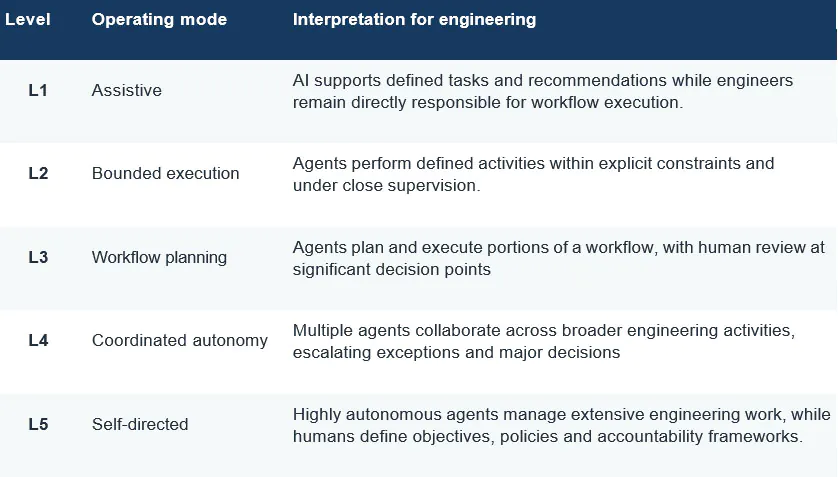
Importantly, this framework provides organizations with a language for discussing progress without creating unrealistic expectations around immediate full autonomy.
Synopsys places workflows alongside compute and engines or solvers as a primary level of engineering optimization. This is important because customer value rarely comes from running a solver in isolation. It comes from completing a defensible chain of decisions, data preparation, analysis, interpretation and verification.
Complex engineering work is naturally decomposed into specialist roles. A multi-agent architecture can mirror this by assigning planning, setup, execution, checking, interpretation and reporting to different agents. Coordination then becomes a core capability, not an integration afterthought.
Engineering autonomy must remain bounded by objectives, constraints, permissions and validation. The engineer provides intent and remains responsible for accepting results. This human-in-the-loop model is essential when outputs influence safety, compliance, product performance or substantial commercial decisions.
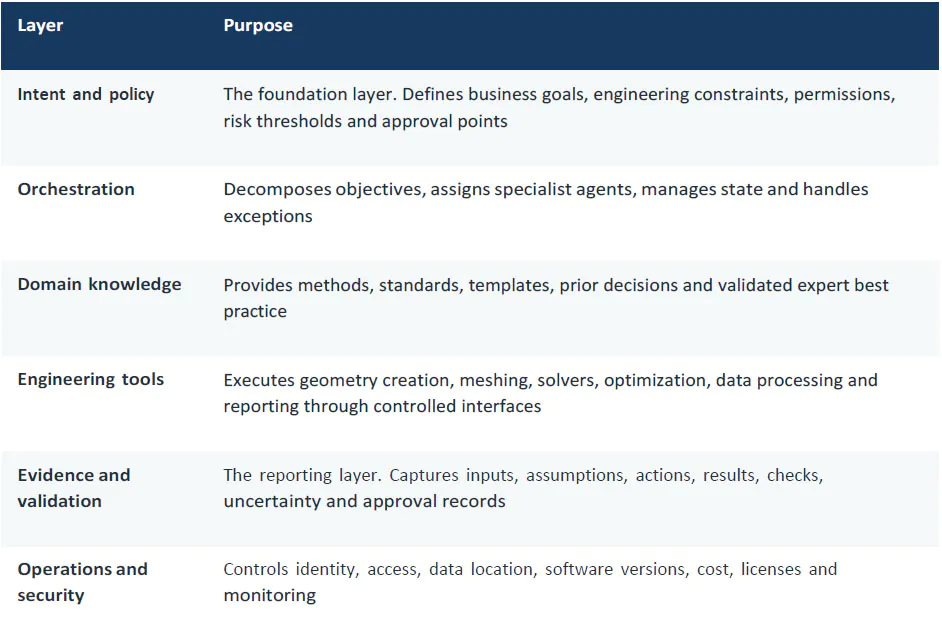
A credible agentic engineering environment is broader than the language model. The most effective implementations combine six interconnected layers comprising domain knowledge combines domain knowledge, orchestration, deterministic engineering tools and governance. The following layers provide a useful reference model.
Simulation is one of the most compelling application areas for agentic AI. Simulation teams consistently face three challenges:
Agentic systems provide a practical mechanism for addressing all three.
The strongest target use cases are repetitive, bounded and measurable. Examples include preparing standard analyses, generating study variants, monitoring runs, extracting results, applying known checks and assembling draft evidence packs. These applications reduce effort without transferring final engineering accountability to the agent.
Agentic AI can increase the leverage of scarce specialists. Experts define methods, constraints and acceptance criteria; agents then apply that knowledge consistently across a larger volume of work. This supports simulation democratization while avoiding the assumption that inexperienced users can safely replace specialist judgement.
As workflows mature, simplified interfaces can make validated engineering capability available to product designers, system engineers and other non-specialists. The workflow must constrain allowable inputs, expose assumptions and provide clear escalation routes when a case falls outside its validated envelope.
The greatest value may emerge when agents coordinate across requirements, solution architecture, geometry, simulation, optimization, test and reporting. This aligns agentic AI with the digital engineering narrative: simulation becomes part of a connected decision process rather than a late-stage verification activity.
These use cases create measurable efficiency gains while maintaining engineering oversight.
Over time, organizations can expand agent responsibilities as confidence, governance and validation maturity increase, building trust incrementally through transparent, repeatable and demonstrably reliable outcomes.
The goal is not autonomous simulation. The goal is enabling expert knowledge to be applied more consistently across a larger volume of engineering work.
Organizations should resist the temptation to start with autonomy. The most successful transformations begin with workflow understanding and engineering governance.
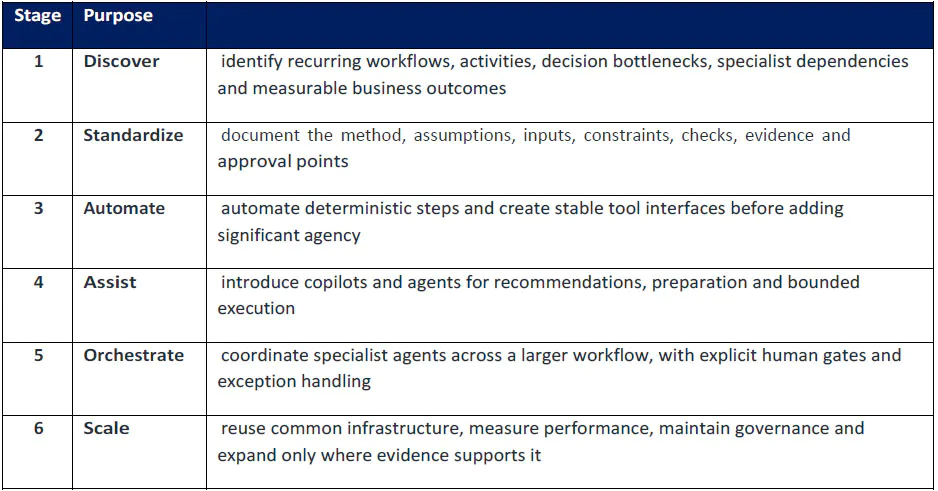
The organizations that move fastest will not necessarily be those pursuing the highest levels of autonomy. They will be those developing the strongest trust architectures.
Synopsys provides a strategic product portfolio, yet some customers may need support translating possibilities into their own engineering environment. Bridging the gap between ambition and operational deployment by combining simulation expertise, workflow design, integration and customer discovery is a must.
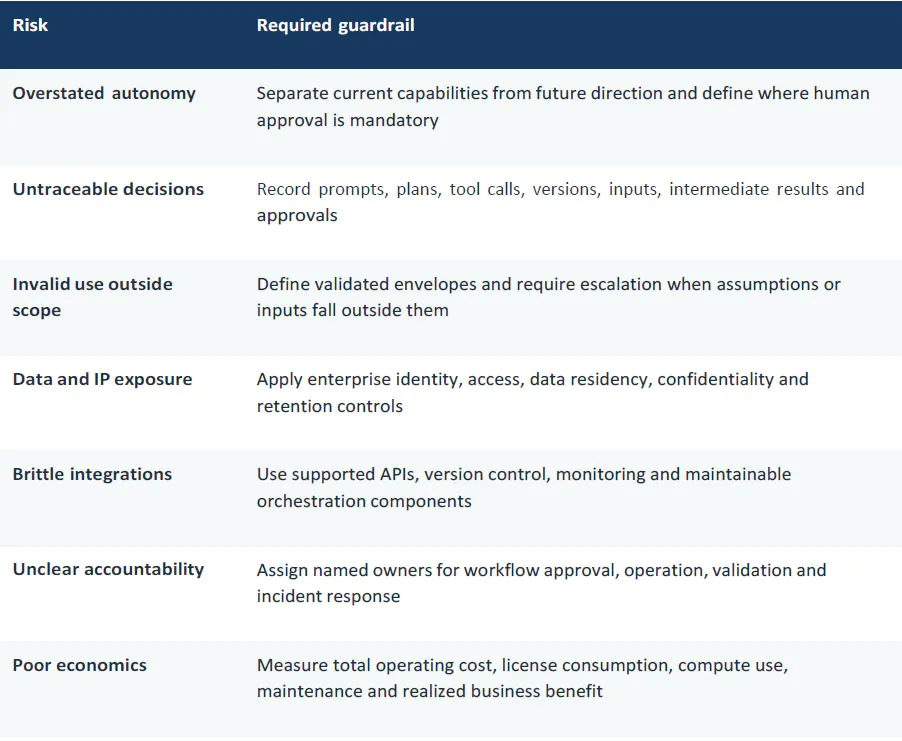
The strongest aspect of this approach to agentic AI is the clarity of direction. This paper describes the development of agentic AI workflows as the staged evolution of engineering work, gives multi-agent workflow orchestration a central role and avoids reducing the opportunity to a conversational conversation. The model also prompts important customer questions because agents will increasingly consume tools, data and engineering services alongside human users.
The objective is to help customers identify where high-toil work, scarce expertise and repeatable methods create a credible case for governed agents. Early engagements should deliver measurable workflow improvements while building the architecture, controls and customer confidence required for greater autonomy later.
This positions agentic AI as a practical extension of simulation democratization and digital engineering: not the replacement of engineering judgement, but the scalable application of expert knowledge through controlled, traceable and increasingly capable workflows.