Getting Started with Simulation – A Startup’s Guide on What to do First


Will the structure withstand real-world loads? Could the electronics overheat? Is the airflow behaving as expected? Will the antenna still perform once it is installed inside the product? Can the design be made lighter, more efficient or easier to manufacture?
Simulation can help answer all of these questions, but figuring out where to start and how to ramp up in-house simulation capabilities can be a major stumbling block, particularly for those with an Ansys Startup Bundle which offers a huge range of simulation applications across multiple physics disciplines.
For a small engineering team with limited time and resources, the first steps should focus on tackling the uncertainty that presents the greatest risk to the product or the business.
In simple terms, start with the question that could make or break your design.
It can be tempting to begin with the part of the product that appears most technically sophisticated. However, the most complex system is not necessarily the one that needs to be simulated first. Instead, consider which unanswered question could have the greatest impact on your development plans.
Ask yourself and your team:
The answers should help identify your first simulation priority.
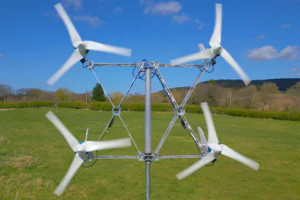 For example, Myriad Wind Energy Systems, a Scottish startup developing modular wind turbine technology needed to validate and de-risk its turbine concept before committing further resources. Rather than attempting to simulate every aspect of the complete system immediately, Myriad focused on fundamental questions around structural integrity and performance under extreme load conditions.
Using Ansys Mechanical, the team analyzed ultimate load cases to assess whether the modular turbine structure could meet essential safety and efficiency requirements. This early focus allowed Myriad to identify potential issues and optimize design features before moving to hardware testing, reducing the financial risk associated with physical prototypes.
Read the full Myriad Wind Energy Systems case study >>
The lesson for other startups is simple: your first simulation should address the uncertainty that could most seriously affect the viability of your product. Once that risk is better understood, the simulation scope can expand alongside the design.
Before selecting a simulation tool, define the decision that the analysis needs to support.
“We need to simulate our product” is too broad. Depending on the required physics, a more useful starting point could be:
Structural and Mechanical
Computational Fluid Dynamics
Electronics
Optics and Photonics
Assessing questions like these can therefore help prevent unnecessary analysis. Your first model does not need to represent every detail of the final product. It needs to provide enough reliable information to help you make a better decision.
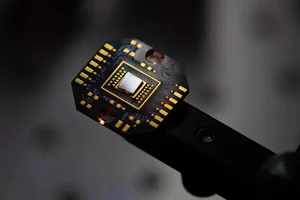 As an example, Sparrow Quantum’s key starting question was: ‘Where is the optical system losing efficiency, and how can we improve it?’
Optical losses could occur at several stages within its quantum photonic chips, making it difficult to identify where performance was being degraded. Using Ansys Lumerical, the team could investigate these losses and explore design variations before committing to another lengthy and costly fabrication cycle, supporting faster iteration and more confident design decisions.
Read the full Sparrow Quantum case study >>
Every product and technology is different, but several engineering challenges repeatedly emerge during early-stage development.
 Structural simulation can help determine how a component or assembly responds to forces, pressure, impact, vibration or repeated loading. Concerns may include:
 Thermal simulation can help your team understand where heat is generated, how it moves through a product and if proposed cooling measures are sufficient. This is key if a product contains:
 Computational fluid dynamics (CFD) can be used to investigate the movement of liquids and gases through or around a product, and is a suitable starting point if performance depends on:
 Optical simulation can help predict how light behaves within a product and how performance could be affected by the design, materials and operating conditions, benefiting products that involve:
 Electromagnetic simulation can help determine how antennas and electronic systems will perform once they are integrated into the complete product for applications including:
 Simulation can help compare designs and materials before committing to a prototype, supporting a better balance between performance, weight, durability and cost, helping to:
An early simulation does not need to reproduce every bolt, wire, surface detail and operating condition as in many cases, a simplified model can answer the first important question more quickly. This can then be expanded as the design matures and new decisions need to be made.
A sensible first project should therefore begin with a clearly defined engineering question, supported by known or reasonably estimated operating conditions and relevant material and geometry information. It should also produce a measurable result that can inform a specific design or development decision.
The goal here is not to create the most impressive simulation possible. It is to generate useful engineering insight at the point when the design can still be changed.
Simulation is sometimes introduced late in development as a final check that a nearly completed design will work. By that stage, major decisions may already be locked in and changes can become costly.
The earlier simulation is encompassed into into the design process, the more impact it can have in comparing concepts, challenging assumptions, and identifying weak points before the team makes the heavy investment into physical prototypes or production-ready designs.
This does not remove the need for physical testing. Instead, it helps the team enter testing with a better-informed design and a clearer understanding of what needs to be validated. The result is a more focused development process in which prototypes are used to confirm and improve a design, rather than discover fundamental problems that could have been identified earlier.
 Working with EDRMedeso, Airmaster adopted simulation specifically to support earlier, better-informed design decisions. Using Ansys Discovery, its engineers can compare airflow concepts, visualize pressure drops and see how design changes influence efficiency and airflow distribution before choosing which ideas to manufacture. This allows the team to narrow down viable options digitally, using physical prototypes for final validation rather than deciding which concepts work in the first place.
Read the full Airmaster case study >>
Startups do not need to simulate everything, all at once.
Commence with the assumption that carries the greatest risk and then define the decision that needs to be made. Build a manageable model that can start generating workable insight and then use the results to determine the next step.
The right first simulation should do more than produce an interesting visualization. It should help your team avoid a poor decision, choose between alternatives or move forward with greater confidence.
For a startup, simulation isn’t a nice-to-have — it’s a lever that turns limited cash into more iterations, limited headcount into broader capability, and limited time into a real shot at market. The teams that adopt it early build better products, faster, and with the evidence to back them up.
Joining the Ansys Startup Program with EDRMedeso combines access to Ansys simulation solutions with training, technical support and engineering expertise that help new businesses begin with the tools and level of support that suit their current stage, rather than trying to build an advanced simulation process from scratch.
Find out more about the Ansys Startup Program >>